http://creation.com/hadrosaur-skin
Hadrosaur skin found
Flickr/CLS Research Office (CC BY-SA 2.0)

University of Regina researcher Mauricio Barbi holds a hadrosaur
skin sample that he and his colleagues hope will still contain melanosomes,
the cellular organelles that contain pigments that control skin colour.
“If we are able to observe the melanosomes and their shape, it will
be the first time pigments have been identified in the skin of a
dinosaur,” he said. “We have no real idea [yet] what the skin looks like.
Is it green, blue, orange …”
1
Published: 23 July 2013 (GMT+10)
Such is the power of the dinosaurs-died-out-millions-of-years-ago paradigm,
that it not only limits what scientists
expect to find, but also bizarrely
affects how they view ‘unexpected’ evidence when they
do find
it.
The discovery of hadrosaur (duck-billed dinosaur) skin near Grande Prairie,
Alberta, Canada, is a classic example. University of Regina researcher Mauricio
Barbi recounts: “As we excavated the fossil, I thought we were looking
at a skin impression. Then I noticed a piece came off and I realized this is
not ordinary—this is real skin. Everyone involved with the excavation
was incredibly excited ….”
2
Their excitement is understandable. Everybody is taught that dinosaurs became
extinct millions of years ago yet here is a piece of real skin. No wonder they
didn’t expect to find it, and initially thought it must have been only
a skin impression. The basic question arising from the discovery ought now
to have been, “Why is it that we’ve been taught these fossils are
millions of years old, when here quite plainly is evidence to the contrary?”
Instead, Mauricio Barbi and colleagues are trying to answer
their question: “how
the fossil remained intact for around 70 million years.”
They plan to use the Canadian Light Source (CLS) synchrotron to look at melanosomes—the
cellular organelles that contain pigments that control the colour of an animal’s
skin.
Mauricio Barbi and colleagues are trying to answer
their question: ‘how the fossil remained intact for around 70 million years.’
“If we are able to observe the melanosomes and their shape, it will
be the first time pigments have been identified in the skin of a dinosaur,” said
Barbi. That will determine if the hadrosaur skin was green or grey like most
dinosaurs are currently portrayed, or a completely different colour.
CLS scientist Tim May is also amazed: “It is astonishing that we can
get information like this from such an old sample.”
And Barbi further mused: “What’s not clear is what happened to
this dinosaur and how it died. There is something special about this fossil
and the area where it was found, and I am going to find out what it
is.”
3
If only these researchers could look at the world’s geological and fossil
evidence through the biblical framework of a 6,000-years-ago Creation and 4,500-years-ago
Flood timeline, they would be way less incredulous.

Dino skin “glossy and black, unlike anything I
had ever seen in the field before”
Flickr/CLS Research Office (CC BY-SA 2.0)
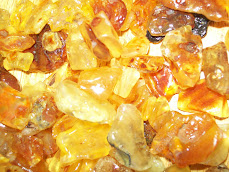
The photo at left shows part of the hadrosaur skin sample found in a
remote area of northwestern Alberta known as the Wapiti formation.
It was found by paleontologist Philip Bell, who trawls
the dry riverbeds
there every summer, looking to see if the spring runoff has exposed
any fossils. Sure enough, in June 2012 he and his team came upon a
cliff that had
collapsed, revealing dinosaur remains.“I first picked up
a bit with skin
impressions, and I thought, great, there should be more
in there,” he said. “We immediately changed our approach to make
sure everything was kept in
pristine condition. Soon, we hit upon a
section of skin that was glossy and black,
unlike anything I had ever
seen in the field before. We looked at it closely, and
realized that it
had a three-dimensional structure.”
4 Now, does Dr Bell consider
that the standard textbook slow-and-gradual processes were
at
work to preserve this skin so exquisitely? Despite believing in
millions-of-years and
evolution, he says: “Obviously skin is
something that decays rapidly, so the
fossilization must have been
incredibly fast.” For some enlightening material on how such
fast fossilization
could occur, Dr Bell would do well to read our
articles
Deluge
disaster and
Dinosaur
herd buried in Noah’s Flood in Inner Mongolia.
Related Articles
References
- Kretzel, L., Scientists use U of S synchrotron to study dinosaur skin, Saskatoon
News—News Talk 650 CKOM, www.ckom.com, 29 April 2013.
Return to text.
- Scientists study rare dinosaur skin fossil to determine skin colour for
first time, phys.org, 29 April 2013. Return to
text.
- Foley, J., What color were dinosaurs? Test of ancient skin sample will
reveal final answer, Nature World News, natureworldnews.com, 29 April 2013.
Return to text.
- In the skin of a … hadrosaur?, Scientific Canadian,
http://tylerirving.ca/?p=1101, 6 May 2013. Return to text.

 The promise of the Father to send the Son came to Adam and Eve in the garden after they sinned and began to die. Our redeemer came 2,000 years ago. Born to die...