Thursday, July 21, 2016

I Love Lucy?

by William A. Hoesch, M.S.*  http://www.icr.org/i/pdf/btg/btg-211.pdf
Lucy, to TV audiences of the 1950s and 1960s, was a spunky red-headed actress. To our more educated schoolchildren today, however, “Lucy” means somethingquite different. She is the celebrated fossil that appears in textbooks as a hairy, seminaked, upright-walking ape striding boldly across a treeless African landscape. Her jaw is set and she leaves behind her a set of trailing footprints. As the unquestioned icon of human evolution, her fame is comparable to that of the former actress. Why is it that all public school children have heard of this fossil? Let us consider Lucy and her species, Australopithicus afarensis. The human evolution story usually begins with the more primitive australopithocines (literally, “southern apes”) that transition into the genus Homo (or human), through either Homo habilis or Homo erectus, depending on who you talk to. Homo habilis is a mixed taxon of both human and ape remains, and has fallen into disrepute. As for Homo erectus, a great many suggest this category be subsumed into Homo sapiens. Thus “Lucy” and the afarensis fossils occupy a critical place in the human evolution story, squarely between that of the truly apish australopithocines and humans. Lucy’s skeleton was about 40% complete and was a remarkable discovery when unearthed by Don Johanson in 1974.

Thursday, May 26, 2016

Does Science Confirm the Bible's History? You Bet!

New DNA Study Confirms Noah


Evolutionary teachings hold that all mankind arose from a population of ape-like ancestors from which chimpanzees also evolved. But Genesis, the rest of the Bible, and Jesus teach that all mankind arose from Noah's three sons and their wives. A new analysis of human mitochondrial DNA exposes two new evidences that validate the biblical beginnings of mankind.
Mitochondrial DNA comes from mothers. Mother egg cells transmit their mitochondrial DNA (mtDNA) into the cellular mitochondria of every child born. This unique annex of DNA contains 16,569 bases—either adenine, guanine, cytosine, or thymine (A, G, C, T)—that encode vital cellular information, like an instruction manual.
Scientists have been comparing the genetic differences between every major people group around the globe. How did those differences arise?
Assuming that God placed the ideal mtDNA sequence into Eve, all those differences arose by mutations since the Genesis 3 curse, about 6,000 years ago. Other scientists measured the rate at which these copying errors occur. Though very slow—we acquire about one mutation every 6 generations—a few dozen mutations could appear after several millennia.
*Mr. Thomas is Science Writer at the Institute for Creation Research.
Article posted on May 16, 2016.

Tuesday, May 24, 2016

2016 Summer Fairs

The What's the Evidence? booth will be at the following locations this summer:
Sauk County fair in Baraboo
July 13-17
Dane County Fair in Madison
July 20-24
Waukesha County Fair in Waukesha
July 20-24
WI State Fair in Milwaukee (West Allis)
August 4-14
Sheboygan County Fair in Plymouth
Sept. 1-5

Monday, April 25, 2016

Yes, The Earth's Population is Evidence the Bible is True

Our newest card discusses this topic. It's not too difficult to understand, even if you are not a numbers person. Enjoy...

Billions of People in Thousands of Years?

by Monty White on ; last featured January 7, 2008 
         
Creationists are often asked, “How is it possible for the earth’s population to reach 6.5 billion people if the world is only about 6,000 years old and if there were just two humans in the beginning?” Here is what a little bit of simple arithmetic shows us.

SIMPLE, CONSERVATIVE ARITHMETIC REVEALS CLEAR MATHEMATICAL LOGIC FOR A YOUNG AGE OF THE EARTH.

One Plus One Equals Billions


Let us start in the beginning with one male and one female. Now let us assume that they marry and have children and that their children marry and have children and so on. And let us assume that the population doubles every 150 years. Therefore, after 150 years there will be four people, after another 150 years there will be eight people, after another 150 years there will be sixteen people, and so on. It should be noted that this growth rate is actually very conservative. In reality, even with disease, famines, and natural disasters, the world population currently doubles every 40 years or so.1
After 32 doublings, which is only 4,800 years, the world population would have reached almost 8.6 billion. That’s 2 billion more than the current population of 6.5 billion people, which was recorded by the U.S. Census Bureau on March 1, 2006.2 This simple calculation shows that starting with Adam and Eve and assuming the conservative growth rate previously mentioned, the current population can be reached well within 6,000 years.


Impact of the Flood


We know from the Bible, however, that around 2500 BC (4,500 years ago) the worldwide Flood reduced the world population to eight people.3 But if we assume that the population doubles every 150 years, we see, again, that starting with only Noah and his family in 2500 BC, 4,500 years is more than enough time for the present population to reach 6.5 billion. 

FROM TWO PEOPLE, CREATED ABOUT 6,000 YEARS AGO, AND THEN THE EIGHT PEOPLE, PRESERVED ON THE ARK ABOUT 4,500 YEARS AGO, THE WORLD’S POPULATION COULD EASILY HAVE GROWN TO THE EXTENT WE NOW SEE IT—OVER 6.5 BILLION.
Evolutionists are always telling us that humans have been around for hundreds of thousands of years. If we did assume that humans have been around for 50,000 years and if we were to use the calculations above, there would have been 332 doublings, and the world’s population would be a staggering figure—a one followed by 100 zeros; that is
10,000,000,000,000,000,000,000,000,000,000,
000,000,000,000,000,000,000,000,000,000,
000,000,000,000,000,000,000,000,000,000,
000,000,000.
This figure is truly unimaginable, for it is billions of times greater than the number of atoms that are in the entire universe! Such a calculation makes nonsense of the claim that humans have been on earth for tens of thousands of years.

Simple, conservative arithmetic reveals clear mathematical logic for a young age of the earth. From two people, created around 6,000 years ago, and then the eight people, preserved on the Ark about 4,500 years ago, the world’s population could have grown to the extent we now see it—over 6.5 billion. 

With such a population clearly possible (and probable) in just a few thousand years, we could actually ask the question, “If humans were around millions of years ago, why is the population so small?” This is a question thatevolution supporters must answer.


Saturday, March 12, 2016

Apatosaurus Display in Booth

We've dressed up our Apatosaurus femur bone display with this new banner. It explains some of the evidences for "recent" burial of dinosaurs in the flood of Noah's time, i.e. osteocytes and red blood cells in dinosaur bones, and C14 still in dinosaur bones. If dinosaurs have been extinct for millions of years, the bones would be rock solid (or decayed), and could not have fresh tissue still inside them. It all points to exactly how the Bible recounts the history of both man and dinosaurs. Both were created on Day 6, both were originally plant eaters (there was no death in the prefect Garden), and both have been corrupted and cursed due to sin. What a magnificent creature the Apatosaurus must have been. And what a Great God we serve, who left their bones in the earth to remind us of his righteous judgment and the salvation he offered those in Noah's day by the Ark. Today we know Jesus is our Ark of Salvation, keeping us safe from God's judgment if we'll only trust him!


Friday, March 4, 2016

Another Creation Museum in the Works! This one in Dallas, Tx


Online Tour of the Future Museum

ICR is ready! The ICR Museum of Science and Earth History will be the culmination of decades of study and research. God has opened the door to make this a reality.
History of Science—Learn the keys of the scientific method and how following them leads to discoveries that confirm Scripture.
Origin of the Universe—Explore the wonders of the universe and learn about big problems with the Big Bang.
Garden of Eden—Feel the majesty of the stunning display of variety and created kinds in God’s “very good” creation.
DNA—Discover what cutting-edge research reveals about humans, chimps, and genomic studies. See how science reveals the flaws in evolutionary theory.
Noah’s Ark and the Flood—Step into the Ark and experience evidence for the worldwide Genesis Flood in an immersive Ark exhibit.
Grand Canyon—Peer into Grand Canyon and learn how geologists uncover the mysteries of the past. See how Mount St. Helens provides clues to the present.
Dinosaurs—Interact with dinosaur holograms. Explore the science of soft-tissue research. Discover the truth behind the behemoth and leviathan.
Fossils and Buried Clues—Become a paleontologist as you go on a fossil dig!
The Ice Age and Ice Age Theater—Experience the Flood causing a massive Ice Age. Stand between the tusks of a life-size wooly mammoth!
Interactive Exhibits and More—New research, fresh discoveries, and opportunities to explore science further will be constantly changing—a new experience on each visit.
Planetarium—Travel the stars in a 3-D planetarium. Watch how God designed order and creativity among the cosmos.
Auditorium—Expert presentations by ICR scientists with the latest research.
Museum Store—Equip yourself with resources and refuel with a light snack and drink.
Outdoor Park—Relax, eat, or play in a beautiful, picturesque park surrounded by life-size dinosaurs.

http://www.icr.org/article/9233

Friday, February 12, 2016

Is Evolution Based on Science?

Evolution’s Science Status

Ellis & Silk IIEvolution’s Science Status

The status of evolution as a science is verging closer to extinction following a work shop in Germany last month. The essence and definition of science was on center stage at this historical convening of the leading physicists and philosophers of science last month. The meeting convened in the Romanesque-style Ludwig Maximilian University lecture hall. Science writer Natalie Wolchover covered the story for Quanta Magazine entitled “A Fight for the Soul of Science” and later reprinted by on TheAtlantic.com entitled “Physicists and Philosophers Hold Peace Talks.”
The fundamentals of physics currently face a critical problem, explained Nobel laureate David Gross to the three-day work shop attendees – a watershed moment for science. Wolchover explained, “desperate times call for desperate measures.” Specifically, at stake is whether the new concepts in emerging in physics – specifically, the string andmultiverse concepts – is true science or just a philosophy. The pivotal issue centers on whether empirical evidence is still required to establish a scientific theory. Since science standards apply across the spectrum of the natural sciences, the outcome also determines the evolution’s science status.

Source of Crisis

The crisis tip-point occurred with publication of controversial ideas advocated by Richard Dawid, (pictured to the right)  an Austrian philosopher in the 2013 book “String Theory and the ScientificDawidMethod.” The problem stems from the absence of empirical evidence to scientifically supported these new concepts. Dawid argued that the essence and definition of science should be revised to allowing for three kinds of “non-empirical” evidences. The testability and falsifiability requirements of the Scientific Method would be optional.
In response to Dawid proposal, George Ellis from the University of Cape Town, and Joe Silk of the Paris Institute of Astrophysics (the two white-haired physicists pictured above in the front row) called for a consensus work shop to assess Dawid’s proposal in an “incendiary opinion piece” in Nature (2014) entitled “Scientific Method, Defend the Integrity of Physics – attempts to exempt speculative theories of the Universe from experimental verification undermine science.

Debate

Finally, last month one hundred attendees convened to wage, in what Ellis and Silk declared, a “battle for the heart and soul of physics.”
Ellis and Silk accuse string and multiverse conceptualists of “moving the goalposts” of science and blurring the lines between physics and pseudoscience. As Wolchover explains, the new theories are of a –
“wildly speculative nature of modern physics theories… a dangerous departure from the scientific method. Many of today’s theorists — chief among them the proponents of string theory and the multiverse hypothesis — appear convinced of their ideas on the grounds that they are beautiful or logically compelling, despite the impossibility of testing them.”
The problem is, the ancients used beautiful and logical ideas – otherwise known as deductive reasoning – ended up wrong theory. Historically, deductive reasoning track record has been a disaster in discovering the secrets of nature.Aristotle (384-322 BC), one of the most famous Greek philosophers, once reasoned that the “Earth is the center of the universe.” However, when Aristotle’s idea was tested using only empirical data, Nicholas Copernicus (1473-1543) successfully falsified Aristotle’s reasoning – but, at great personal sacrifice.
In the opinion of Ellis and Silk (2014),
“The imprimatur of science should be awarded only to a theory that is testable… Only then can we defend science from attack.”

Outcome

Gross, a prolific string advocate, who was awarded a Nobel Prize in 2004, had kicked off the workshop noting that the problem lies not with physicists, but with the “fact of nature” – an excellent example of anthropomorphic arrogance.
Over three winter days, scholars struggled with the meaning of scientific theory, confirmation and truth; how science works; and whether, in this day and age, philosophy should guide research in physics or the other way around. Over the course of the work shop, any degree of consensus to move the “goal posts” of science was lost in the resulting blur of confusion.
To the question of whether testable and falsifiable is still required to validate a concept as scientific, there was no new consensus. If a theory has no predictive value, can it be scientific? There was no new consensus. What keeps theorists within the bounds of science? There was no new consensus.
Commenting on the use of non-empirical concepts in science, Dawid noted, it
“opens the floodgate to abandoning all scientific principles… Clearly the risk is there.”
Wolchover echoed Dawid’s concern.
“the trash heap of history is littered with beautiful theories… [but], theoretical beauty is not always truth.”
The work shop was an unparalleled twenty-first century watershed moment fighting for the essence and definition of scientific standards. In the end, no cohesive consensus emerged to move the science “goal post.”
With his pet string theory on the line, Gross reluctantly simply countered with –
“I will continue to work on it.”
http://www.darwinthenandnow.com/2016/01/evolutions-science-status/

Thursday, February 4, 2016

What about the Appendix?

Major Evolutionary Blunders: Our Useful Appendix--Evidence of Design, Not Evolution
by Randy J. Guliuzza, P.E., M.D. *
Evidence for Creation

Once there was a teenage girl with a sweet personality, selfless spirit, and diverse skills. But she was so envied by her cruel stepmother and two rude stepsisters that they forced her to constantly do the nastiest jobs in almost total obscurity. The Cinderella story is so universally appealing that it has been translated into over 60 languages and made into multiple films. In these types of stories, the perpetrators’ bigotry reflects their constrained mindset. The worthy becomes worthless in their view.

Belief systems matter.

This is also true in origins research. Some belief systems liberate thinking. Others, like an evolutionary worldview, are so confining that evolutionary biologists may either observe non-existent or overlook actual biological functions based on preconceived notions of what they expect to see.1 One example of this bias is the categorization of the human appendix as a worthless organ by thought-constrained evolutionists. This assumption hindered research on a truly useful part of our digestive system and highlights a colossal evolutionary blunder.

The “Useless” Appendix Is “Evidence” for Evolution

Since Darwin’s time, the world’s sharpest evolutionary biologists have championed the human appendix as unquestionable evidence for evolution and against intelligent design. But scientific research demonstrates the folly of both assertions by showing the appendix to be a fully functional organ.

Darwin cultivated a scientifically regrettable practice that still persists today. He imagined an evolution-caused loss of function for certain biological structures and declared them to be essentially useless—without ever seeking to understand their purpose. In 1874 Darwin said,

With respect to the alimentary canal, I have met with an account of only a single rudiment, namely the vermiform appendage of the caecum….It appears as if, in consequence of changed diet or habits, the caecum had become much shortened in various animals, the vermiform appendage being left as a rudiment of the shortened part….[Regarding humans] not only is it useless, but it is sometimes the cause of death.2

In 2007, over 130 years later, the president of the American Association for the Advancement of Science, Francisco Ayala, announced, “A familiar rudimentary organ in humans is the vermiform appendix….The human vermiform appendix is a functionless vestige of a fully developed organ present in other mammals,” adding the punchline “Vestiges are instances of imperfections—like the imperfections seen in anatomical structures—they argue against creation by design but are fully understandable as a result of evolution by natural selection.”3

Finish article HERE

Thursday, October 29, 2015

I Found This To Be True...

Recently, I had the opportunity to visit the American Museum of Natural History in NYC. I especially was interested in their famous dinosaur displays. What I found there were some nice displays that show the amazing creatures dinosaurs were....and a lot of fairy-tale like stories of their history. My husband and I talked with a lot of other visitors who noticed the same thing. We discussed with them the Biblical perspective of their presence on earth and the likely reason for their demise (The Biblical Flood and harsh world following).  

Can't See the Forest for the Trees

http://www.icr.org/article/8994/
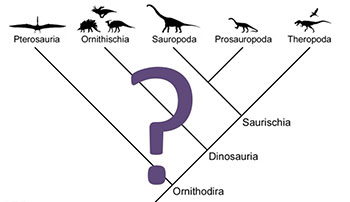
At the 75th annual meeting of the Society of Vertebrate Paleontology, held this year in downtown Dallas, the world's foremost fossil experts presented scores of research summaries. Researchers described extinct giant mammals from Argentina, one-of-a-kind bird fossils from China, and good-old North American classic dinosaurs. Amazingly, almost all of these fossil descriptions included phylogenetic (evolutionary) tree diagrams. Today's paleontologists show a religious-like devotion to fit their finds in an evolutionary tree. And with equally amazing regularity they describe problems with this process of constructing evolutionary trees. Are these problems significant enough to cast doubt on the whole exercise?
One poster described a duck-bill dinosaur (hadrosaur) called Tanius from China and provided two different phylogenetic tree options—an inadvertent but open admission that they don't really know which scenario is correct. Maybe neither. The poster authors wrote, "Tanius sinensis shows a complex of derived and primitive characteristic generating considerable character conflict and resulting in a loss of resolution among non-hadrosaurid hadrosauroids."1 In other words, instead of revealing itself as between other evolutionary forms, Tanius looked quite unique.
*Mr. Thomas is Science Writer at the Institute for Creation Research.
Article posted on October 28, 2015.

Thursday, October 22, 2015

Refreshing Truth for a Cursed World

Dwelling with God: From Eden to the New Jerusalem

iStockphoto
nature_scene
Published: 22 October 2015 (GMT+10)
God created human beings in His image and with the unique capacity for relationship with Him out of the rest of the physical creation. God’s plan has always included dwelling with His people in a place characterized by holiness, and we can see that theme all throughout Scripture.

Eden

Eden was the first place where God communed with man, and its description conveys what the earth was like before sin corrupted it.
“A constant in this passage is the bounty of God’s goodness to his special creation through a beautifully complete environment with luscious verdant herbage and a land rich in water and precious stones.”1 
Eden was the first place where God communed with man.
It was a perfect garden paradise with all types of fruit trees and it was well watered by four rivers. Adam’s job was to tend and keep the garden. Interestingly, these same words would later be used of the priests’ service in the Temple (Numbers 3:7–88:25–2618:5–61 Chronicles 23:32Ezekiel 44:14). “Adam was to begin by ruling the garden for God and presumably to extend God’s reign over the whole earth.”2
Eden was a place God came to commune with Adam and Eve, and because there was no sin, there was no need for sacrifices for sin. However, once Adam sinned, that fellowship was broken and Adam and Eve could not stay in the Garden. They were driven out so they could not eat from the Tree of Life and cherubim and a flaming sword were placed at the entrance so they could never return.

The Tabernacle

While God appeared to people, He did not dwell continually with anyone until the exodus of Israel from Egypt. God’s presence with them symbolized their favoured position as His nation and the people the promised Saviour would come from. He instructed them to build Him a tent so that He would have a dwelling with them. As Scripture elsewhere makes clear, He did not need a house, and He could not be contained in one in any case (1 Kings 8:27). However, it was a powerful symbol and became a central part of the Israelite religion.
Moses was given strict instructions about how to make the tabernacle, and he was warned not to deviate from it. The author of Hebrews says that Moses was shown the heavenly tabernacle, of which the earthly tabernacle was a copy (Hebrews 8:5).
The tabernacle, like Eden, had only one entrance. As one approached closer to the Holy of Holies, the materials became more costly and luxurious. On the outside, the curtains that formed the walls for the tabernacle were plain skins, utilitarian and chosen to withstand the elements. The metal elements were made of cheap bronze. But inside the materials were silver, then gold. The curtains were embroidered with cherubim—the same creatures that guarded the entrance to Eden ‘guarded’ access to God in the tabernacle.
wikipedia.org
menorah
A reconstruction of the lampstand (Menorah) of the Temple created by the Temple Institute
Most Israelites never entered the Tabernacle. “Indeed, the whole structure of the tabernacle emphasizes that God’s presence cannot and must not be entered casually.”3
Rather, they worshipped and sacrificed in the courtyard. The priests could enter the tabernacle to perform their duties. There they would see the altar of incense and the table of the Bread of the Presence, both of which were wooden, overlaid with pure gold, and all the utensils associated with them were also golden.
The other piece of furniture, the most glorious feature most priests would ever see, was the lampstand. It served a practical purpose—the tent was an enclosed space that did not allow sunlight in, so lamps were necessary to allow the priests to see so they could do their work. But it also had important symbolism.
The lampstand was specifically designed to look like a flowering tree with almond blossoms, and some of these blossoms would hold the lamps. The menorah which is used in Jewish worship today is modeled after this lampstand. When it was properly outfitted with the lamps and lit, it would fill the entire tent with light. Most commentators see a clear reference to the Tree of Life in the lampstand.

The Ark of the Covenant

The most intricately-crafted item in the tabernacle was something most people would never see—the Ark of the Covenant. The ‘lid’ of the Ark was the mercy seat—a solid gold slab which perfectly fit over the top of the Ark. Two cherubim were crafted on the top of the mercy seat, and their wings overshadowed the mercy seat. The Ark was appropriately ornate, as it represented the most holy place where the Presence of God dwelled.
Whenever the tabernacle was dismantled to be moved from place to place, a select few priests were entrusted with the task of covering the Ark with special covers which would protect the Ark and shield it from view; the only other person to ever see the Ark was the High Priest, and then only once a year, when he would enter the Holy of Holies to atone for the sins of the people.

Solomon’s Temple

Solomon’s Temple continued some of the motifs present in the Tabernacle. Cherubim guarded the holy place (1 Kings 6:23–28). The palm trees, flowers, and pomegranates decorating the Temple recall the garden paradise (1 Kings 6:29–327:18–20). Because it was larger than the tabernacle, the Temple had not one, but ten lampstands, five on the south side and five on the north side. The Holy of Holies was a perfect cube, overlaid with gold which would symbolized the glory of God.

Ezekiel’s Temple

Solomon’s Temple was destroyed when Judah was conquered and sent into exile; this was God’s judgment on their idolatry. But God promised to restore Israel, and to pour out His Spirit on them (Ezekiel 25–29). In this context, God showed the prophet Ezekiel a vision of a temple. The structure in Ezekiel’s vision had obvious reference both back to Eden and looking forward to the New Jerusalem.
Because God is unchanging, it shouldn’t surprise us that there is continuity in how He presents Himself and the place where He communes with His people.
Cherubim and palm tree motifs featured in Ezekiel’s Temple (Ezekiel 40:1622263741:18–2025–26). The temple featured square dimensions (few height dimensions are given), with the altar in the very center of the square. When the glory of the Lord fills this temple, it makes the very land glow, terrifying Ezekiel (43:1–3).
Water flowed from the temple eastward (through the gate that remained closed because God had entered through it). This unusual stream started as a trickle, but grew to be an impassible river. The water of the river was life-giving; the fertile soil on its banks supported fruit trees on either side (Ezekiel 47:7), and the leaves of these trees are said to be for healing (Ezekiel 47:12). The river flows into the Dead Sea and revives the ecosystem there, allowing many fish to live there (Ezekiel 47:8–10).

The New Jerusalem

When Israel returned from exile, the temple they built did not live up to the glory predicted by Ezekiel, and today, Christians are said to be themselves the Temple of the Holy Spirit (1 Corinthians 6:19–20). But even Ezekiel’s temple pales in comparison to the complete restoration of the Heavens and Earth predicted in Revelation.
After the complete defeat of all God’s enemies, the New Jerusalem is presented descending from Heaven—Heaven and Earth are ‘married’ as God makes His permanent dwelling place with His people. The entire city is radiant with the glory of God, and made of the most precious gold and jewels. It is presented as a perfect cube (as the Holy of Holies was), and huge enough to contain all the people of God from every age with plenty of room to spare.
The New Jerusalem has no Temple; in a sense, it is a temple. There is no need to keep sinners away from God’s presence, because there will never be sinners there. A river like from Ezekiel’s Temple flows from the throne of God and of the Lamb (Revelation 22:1), and the Tree of Life, now a huge orchard, grows on either side, yielding abundant fruit with healing leaves (Revelation 22:2). The New Jerusalem will be unimaginably beautiful and radiant, but by far the greatest privilege will be the immediate access to God believers will have there.

God’s home—and ours

Because God is unchanging, it shouldn’t surprise us that there is continuity in how He presents Himself and the place where He communes with His people. When we look at the places where God chose to dwell, we see that it is pointing toward the New Jerusalem where once again sinless people will dwell with God—this time with no possibility of another Fall.

Related Articles

Further Reading

References and notes

  1. Mathews, K., Genesis 1–11:26, New American Commentary, Holman Publishers, Nashville, p. 199, 1996. Return to text.
  2. Schreiner, T., The King In His Beauty: A Biblical Theology of the Old and New Testaments, Baker Academic, Grand Rapids, p. 7, 2013. Return to text.
  3. Schreiner, ref. 2, p. 42. Return to text.